Launch offer — valid today only

📄 Digital book in PDF · read it on your phone or print it

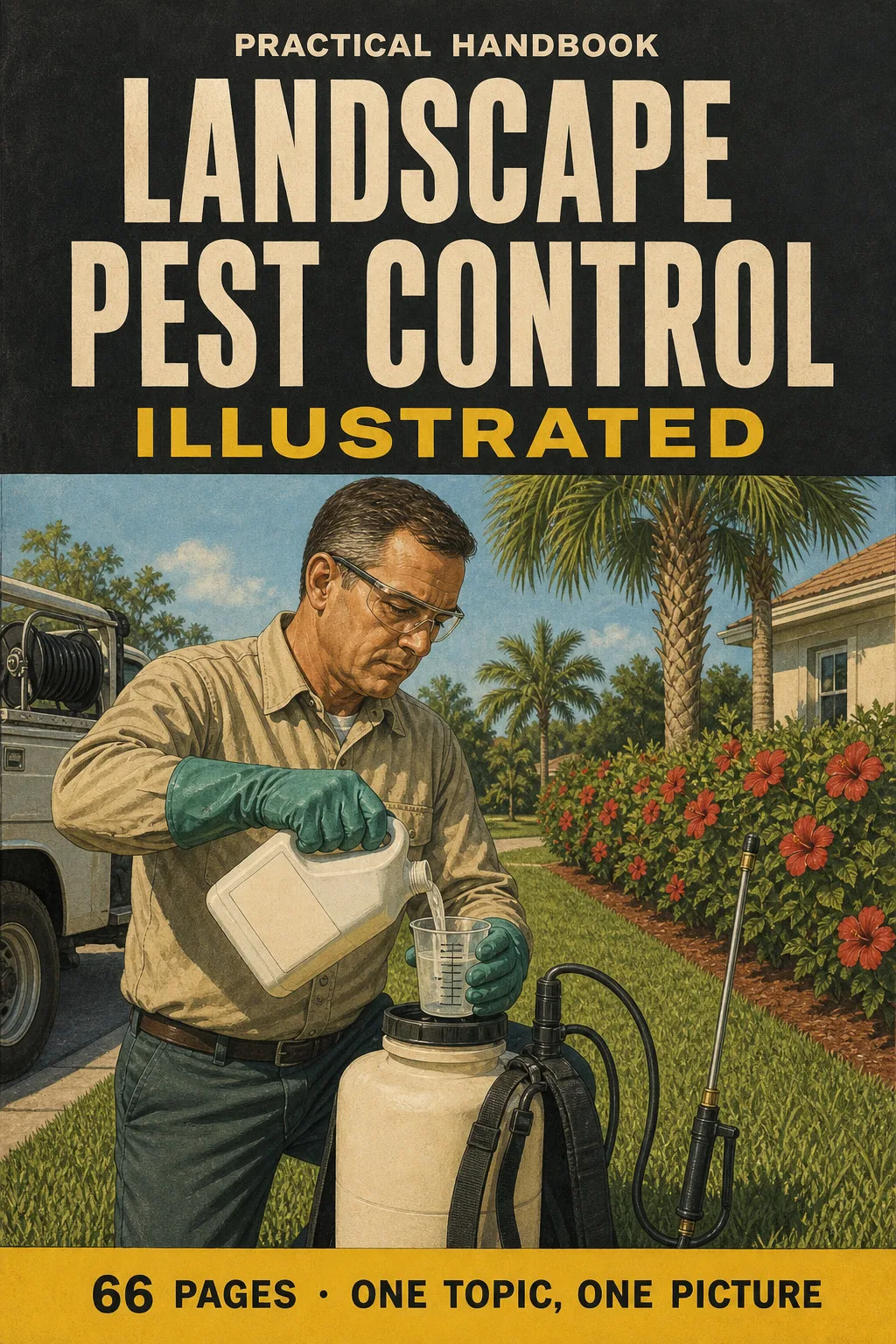
Florida LCLM Exam in Pictures: Read Any Label in 8 Stops and Run IPM in 5 Steps One Topic on Every Page

For the Florida Limited Commercial Landscape Maintenance (LCLM) exam: what your license covers, the 8 stops of a label, signal words, REI, IPM in 5 steps, chewing vs. sucking pests, backpack calibration and drift. One topic per page: the drawing first, then what to remember. 66 illustrated pages.

SHOW ME THE ILLUSTRATED PAGES

🔒 Secure checkout · PDF by email · 30-day guarantee

Every topic, its own pageEvery pest and every label rule drawn, with the explanation right beside it
66 illustrated pages8 parts, from the license and the law to the exam and job review
Up-to-date sourcesFlorida Statutes Chapter 482, Florida Rule 5E-14 and the UF/IFAS training manuals
PDF by emailFormat

Look Inside the Book

Every page has one big drawing and a box with the numbers, steps and label rules you need to know:

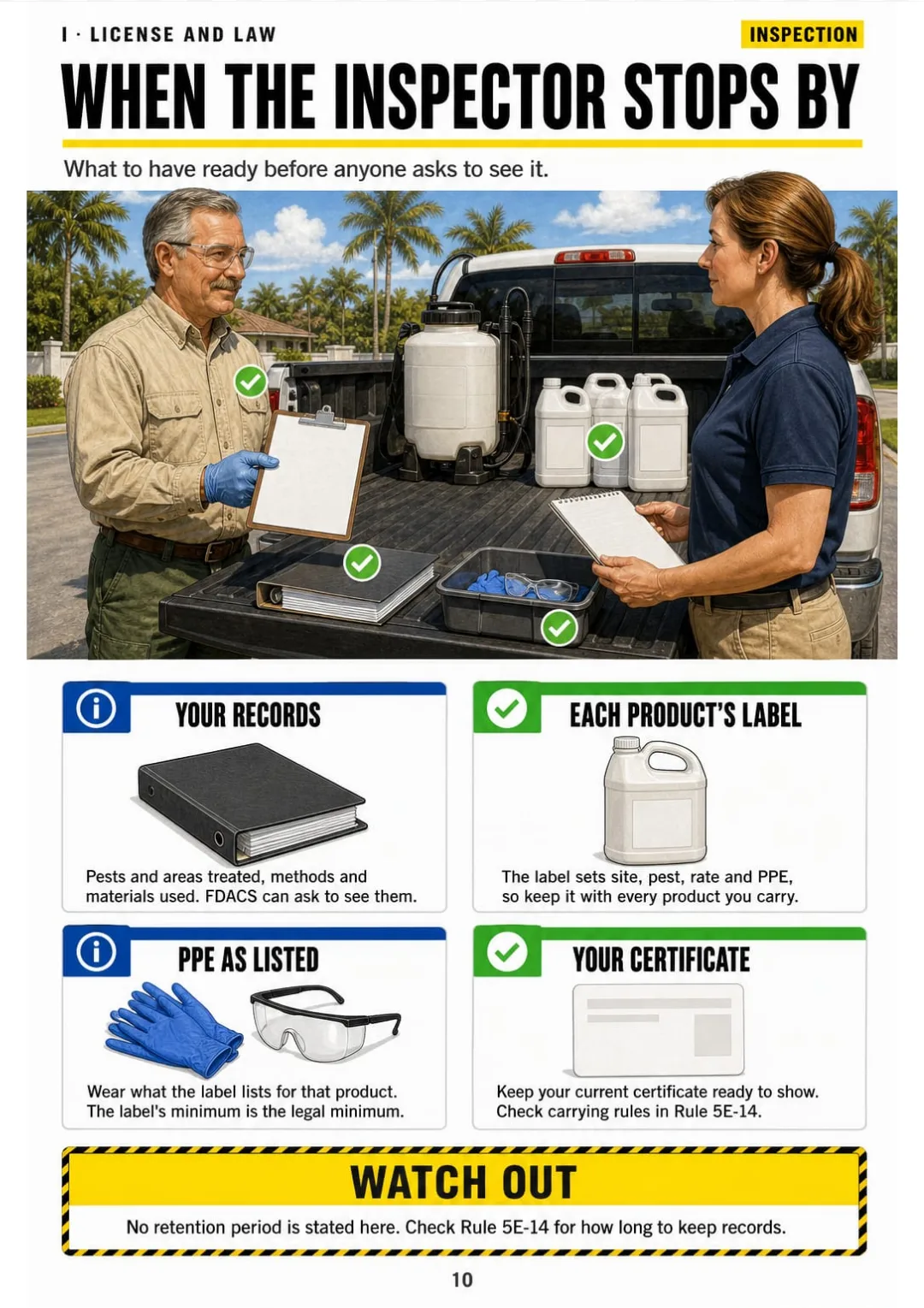
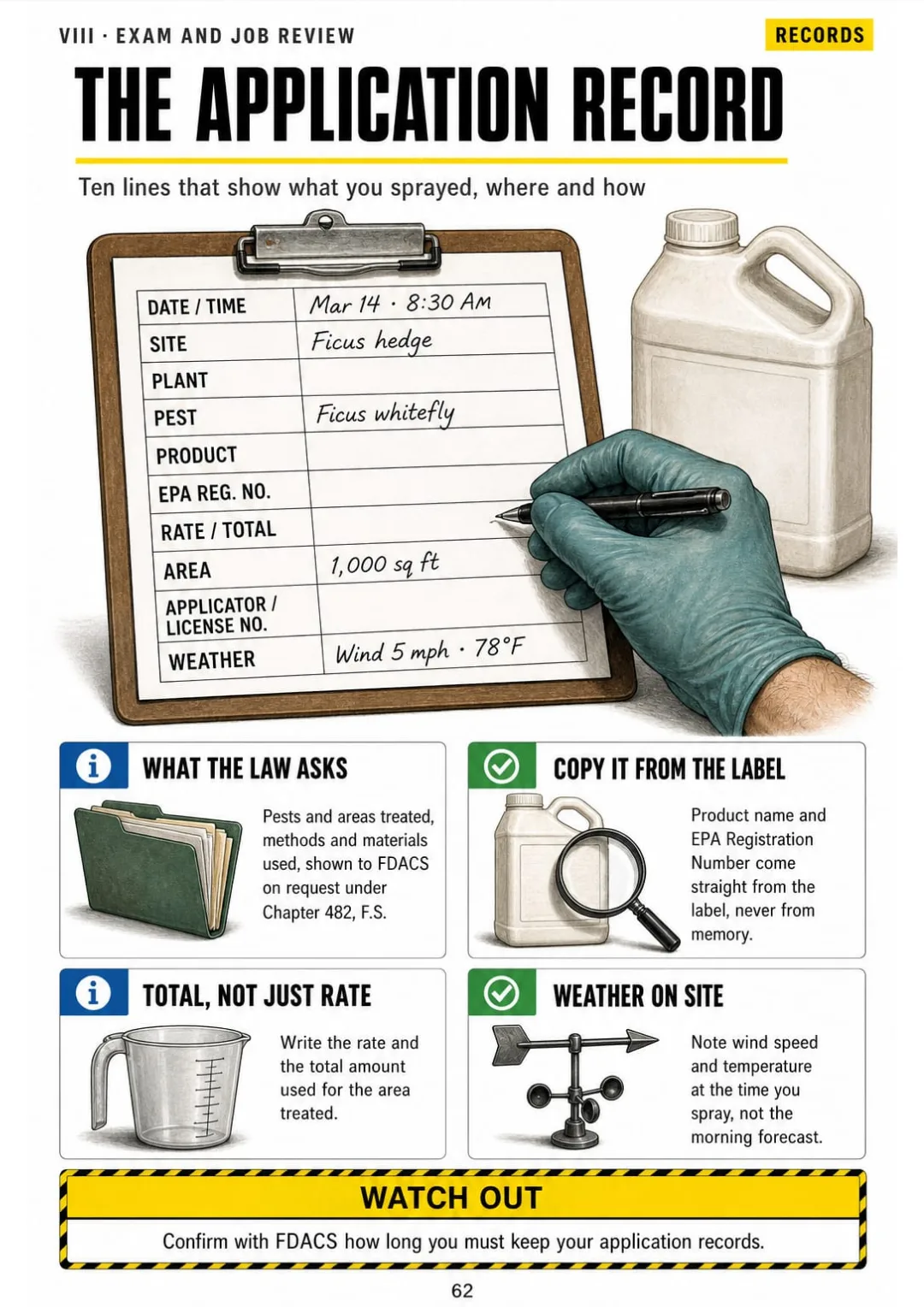
Keep records of pests, areas, methods and materials ready for FDACS, plus labels and the right PPE.
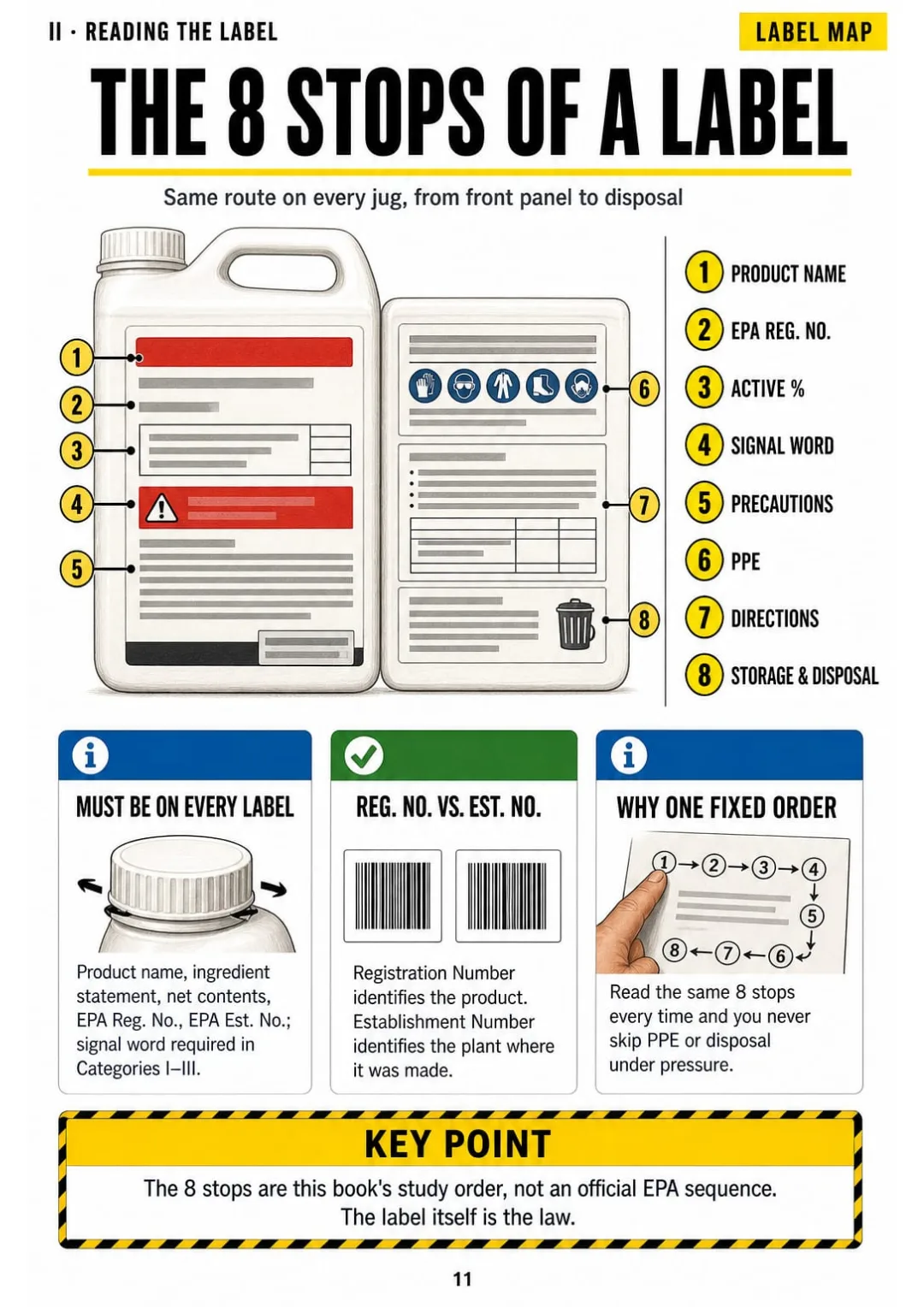
8 numbered stops on one drawn label: product name to storage and disposal
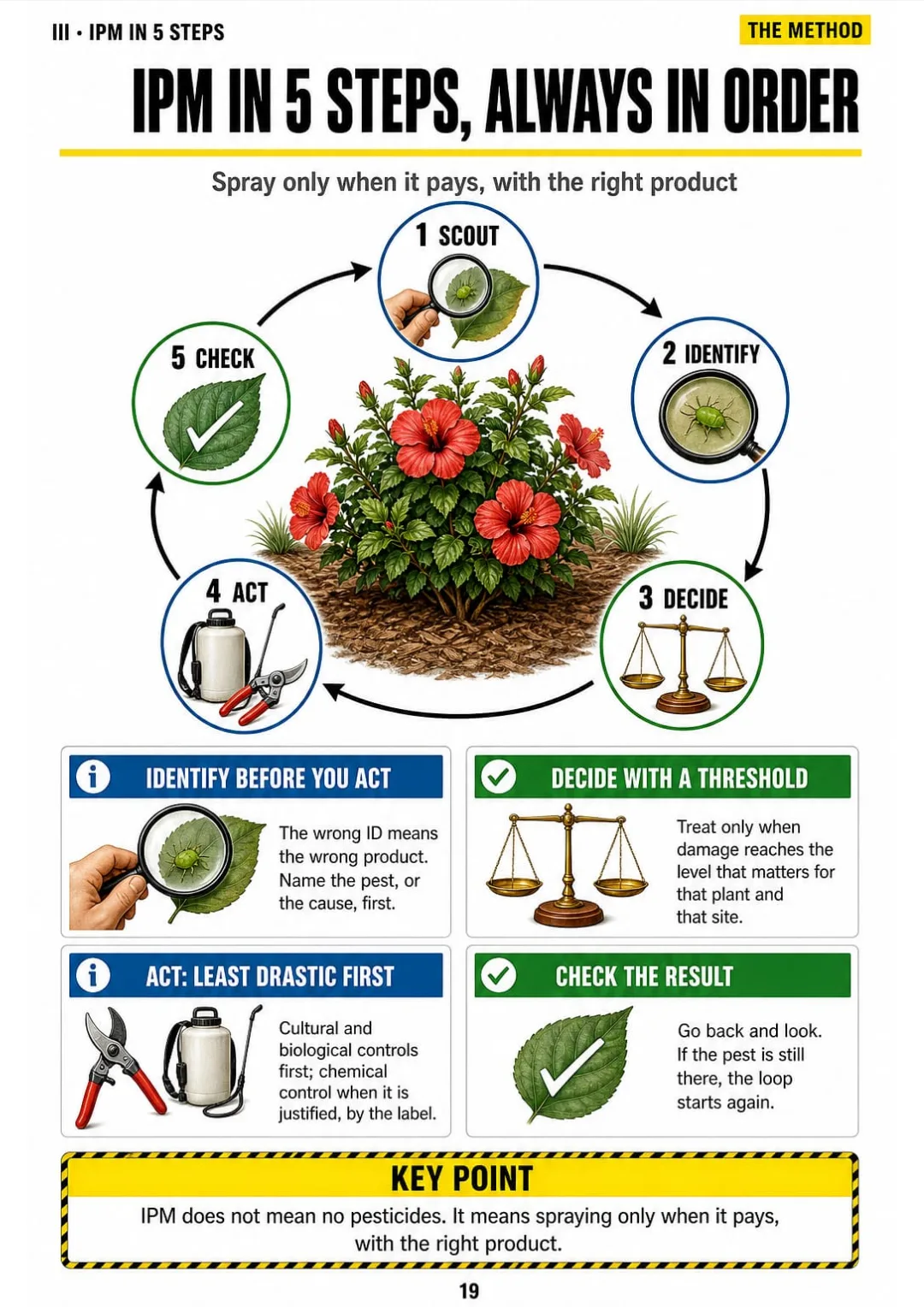
IPM drawn as a loop: Scout → Identify → Decide → Act → Check, then back to Scout.
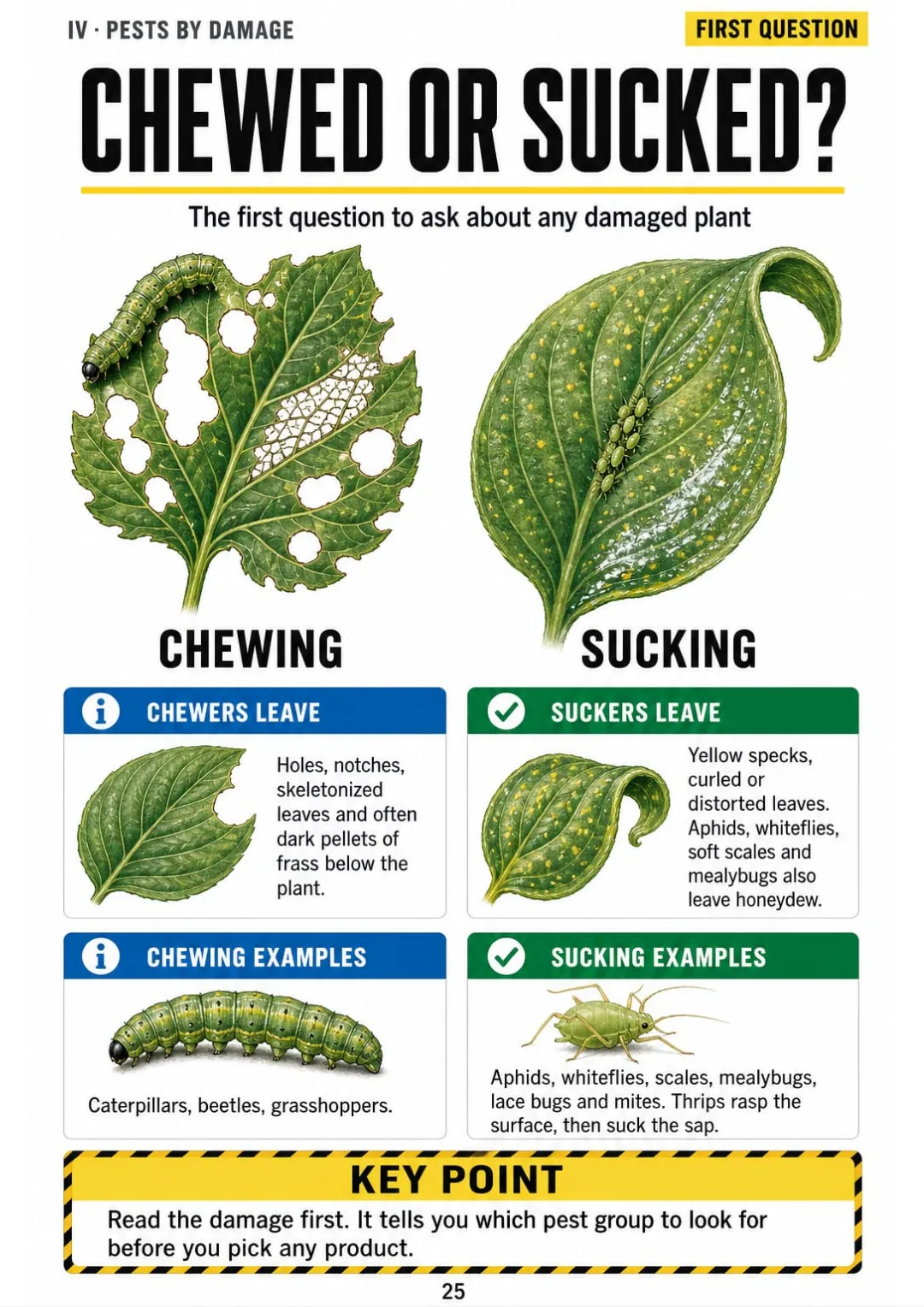
Holes and notches = chewers · yellow specks, curling and honeydew = sucking pests
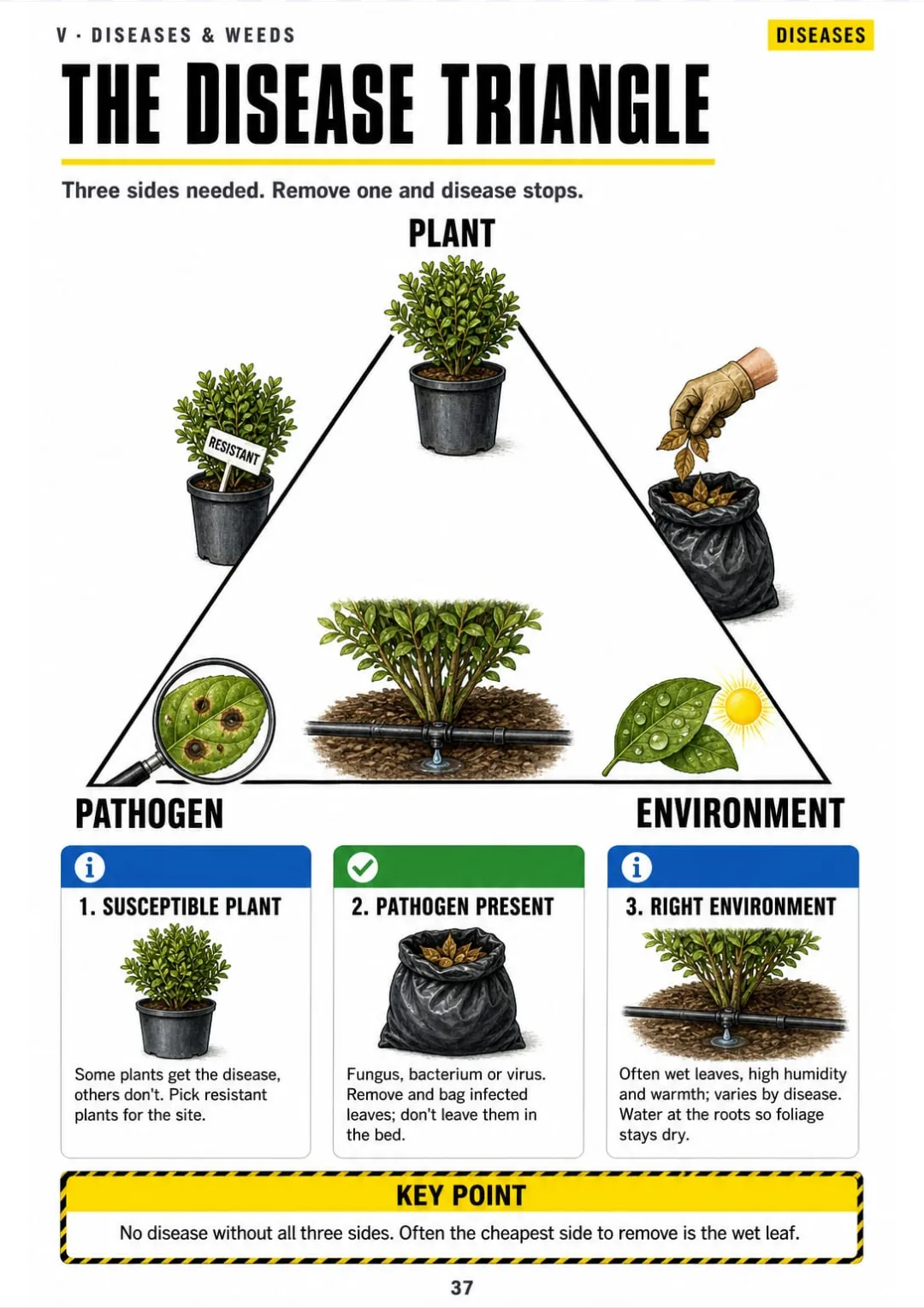
Susceptible plant + pathogen + wet, humid, hot conditions = disease. Remove one side.
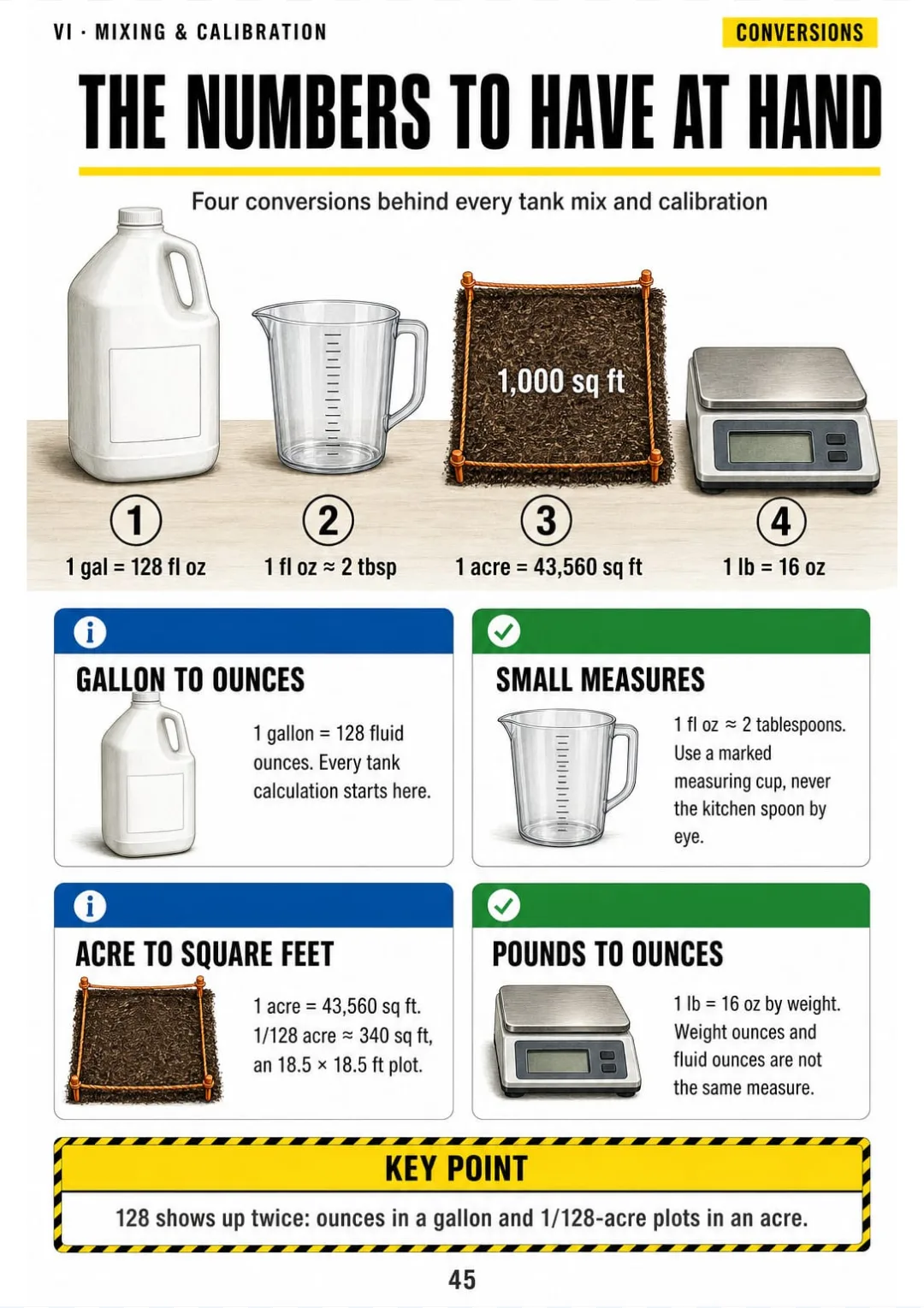
1 gal = 128 fl oz · 1 fl oz ≈ 2 tbsp · 1 acre = 43,560 sq ft · 1 lb = 16 oz
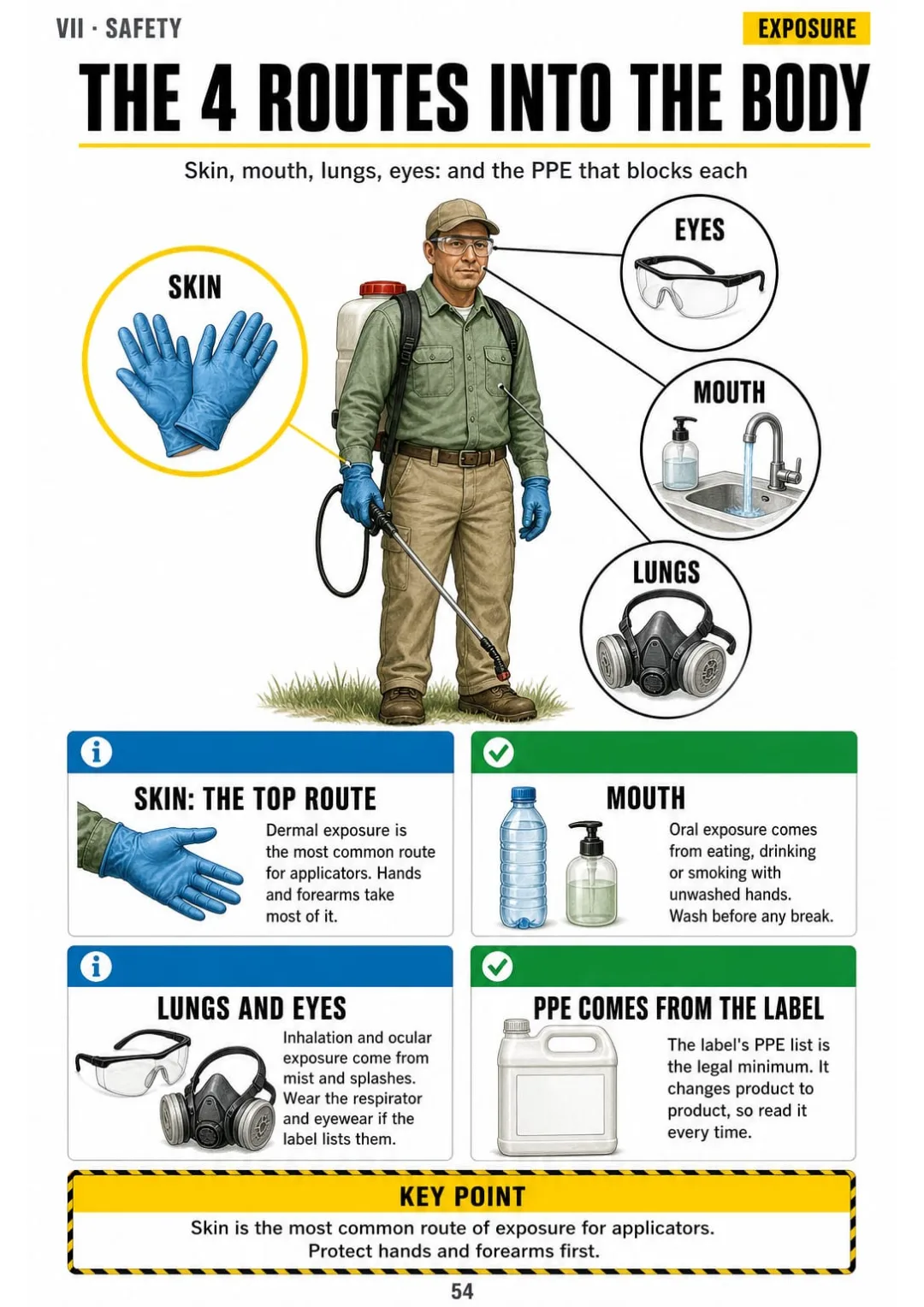
Dermal, oral, inhalation, ocular: skin is the most common route for applicators.
Date, site, plant, pest, product, EPA Reg. No., rate, area, license, weather: filled in

Swipe to see more →

These are real pages from the book. The table of contents is the full one: 8 parts and 62 topics.

The Problem Isn't You. It's How It Was Explained to You.

You're standing at a client's ficus hedge. The leaves are yellowing, the client wants it sprayed today, and last week the practice test asked you what comes right after "identify" in IPM.

The manual covers IPM in page after page of paragraphs: monitoring, thresholds, cultural, biological, chemical, evaluation. All the words are there, but the order isn't. So on the job you reach for the sprayer first.

IPM drawn as a loop: Scout → Identify → Decide → Act → Check, then back to Scout.

In this book IPM is one page: a loop with 5 stops. Scout, Identify, Decide, Act, Check, then back to Scout. Each stop has a drawing of what you actually do there.

The 8 stops of a label, signal words, chewed or sucked leaves, the disease triangle and calibrating a backpack sprayer work the same way: each one has its own page.

You look at the hedge and you know the next step without going back to the manual. Same thing on exam day.

COMPARE FOR YOURSELF

The Same Topic, Two Ways to Study It

THIS
  • The manual: line after line of small print
  • Label sections explained only in words
  • You walk into the exam with doubts
The pesticide label constitutes a legal document, and the applicator is required to comply with all directions contained therein. Label components include the brand or trade name, the ingredient statement expressing active and inert ingredients as percentages by weight, the EPA registration and establishment numbers, the signal word and precautionary statements, the statement of practical treatment, environmental hazards, directions for use including the misuse statement, restricted-entry intervals, and storage and disposal requirements, all of which must be reviewed prior to mixing, loading and application.
FOR THIS
  • The whole label in one drawing
  • The 8 stops numbered, always in order
  • You see it and you get it
8 numbered stops on one drawn label: product name to storage and disposal
CONTENTS

Take a Look at the 8 Parts and 62 Topics

The license and the law, reading the label, IPM in 5 steps, pests by the damage they leave, diseases and look-alikes, mixing and calibration, safety and the environment, and exam and job review: 66 pages, all illustrated

IThe License and the Law · pp. 5-10
  1. What the Limited Commercial Landscape Maintenance (LCLM) Certification Lets You Do
  2. Who Regulates You in Florida
  3. From Application to Card: The Path to Your License
  4. The Label Is the Law
  5. General Use vs. Restricted Use Pesticides
  6. What an Inspector Can Ask You on Site
IIReading the Label in the Same Order Every Time · pp. 11-18
  1. The 8 Stops of a Label, Always in the Same Order
  2. Signal Words: CAUTION, WARNING, DANGER
  3. LD50: Why a Smaller Number Means More Dangerous
  4. Active vs. Inert Ingredients
  5. Formulation Codes on the Jug
  6. PPE From the Label, Not From Habit
  7. REI and Pre-Harvest Interval: Two Different Clocks
  8. Environmental Hazards and Pollinator Statements
IIIIntegrated Pest Management in 5 Steps · pp. 19-24
  1. IPM: Scout, Identify, Decide, Act, Check
  2. Scouting: Where and How to Look
  3. Action Threshold: When Damage Is Worth Treating
  4. Cultural Controls First
  5. Biological Control: The Insects Working for You
  6. Chemical Control and Resistance
IVPests by the Damage They Leave · pp. 25-36
  1. Chewing vs. Sucking Mouthparts
  2. Honeydew and Sooty Mold: Look Above the Black
  3. Whiteflies on Ficus and Other Hedges
  4. Armored Scales vs. Soft Scales
  5. Mealybugs: White Cotton in the Leaf Joints
  6. Aphids: Curled New Growth
  7. Thrips: Silver Streaks and Rolled Leaves
  8. Spider Mites: Fine Stippling and Webbing
  9. Lace Bugs: Bleached Leaves With Black Spots Underneath
  10. Caterpillars: Holes, Frass and Chewed Edges
  11. Palm Pests: Read the Fronds
  12. Fire Ants in Landscape Beds
VDiseases, Weeds and Look-Alikes · pp. 37-44
  1. The Disease Triangle
  2. Leaf Spots and Powdery Mildew
  3. Root Rot: Wilting in Wet Soil
  4. Nematodes: The Problem You Cannot See
  5. Weeds in Beds: Broadleaf, Grass and Sedge
  6. Herbicide Injury on Ornamentals
  7. Drought, Nutrients or Pest?
  8. Irrigation Faults That Look Like Pests
VIMixing and Calibration · pp. 45-53
  1. The Numbers to Have at Hand
  2. Measuring a Bed's Area
  3. Calibrating a Backpack Sprayer in 4 Steps
  4. How Much Product Goes in the Tank
  5. Rates per Gallon: Mixing by Concentration
  6. Granular Products: Spreader Calibration
  7. Mixing Order in the Tank
  8. Nozzles, Pressure and Droplet Size
  9. Recalibrate When Something Changes
VIISafety, Spills and the Environment · pp. 54-61
  1. The 4 Routes Into the Body
  2. Gloves and Clothing After the Job
  3. First Aid: What to Do in the First Minutes
  4. Drift: Wind, Heat and Timing
  5. Protecting Water: Runoff and Leaching
  6. Spills: Control, Contain, Clean Up
  7. Transport and Storage in the Truck
  8. Triple Rinse and Container Disposal
VIIIExam and Job Review · pp. 62-66
  1. The Application Record: What to Write Down
  2. Talking to the Client: What, Why and When to Re-enter
  3. Look-Alike Pairs Most Asked About
  4. Most Frequent Calculation Mistakes
  5. One-Page Checklist Before Every Application

One Page, One Topic, All Clear

Think of it this way:

It's Monday morning. The hibiscus at a client's house has white specks and a black film on the leaves, and the client asks what that black stuff is and whether it's a disease.

You open the page on honeydew and sooty mold and see it drawn: the black film on the leaf, and the sucking insect feeding right above it. Next to it, what it gets confused with.

Susceptible plant + pathogen + wet, humid, hot conditions = disease. Remove one side.

Same with the 8 stops of a label, the two clocks of REI and pre-harvest interval, calibrating a backpack sprayer, the 4 routes into the body and the application record: each one on its own page.

Landscape Pest Control Illustrated is 8 parts and 62 topics, all drawn, and at the end a review with look-alike pairs, the most frequent calculation mistakes and a one-page checklist before every application.
What you see drawn, you don't have to memorize.

What's Inside Landscape Pest Control Illustrated:

Ipp. 5-10

The License and the Law

What the limited landscape license covers and what it doesn't, who regulates you, the path to your card, the label as the law, general vs. restricted use and what an inspector can ask on site.

IIpp. 11-18

Reading the Label in the Same Order Every Time

The 8 stops of a label, signal words, LD50, active and inert ingredients, formulation codes, PPE from the label, REI and pre-harvest interval, and pollinator statements.

IIIpp. 19-24

Integrated Pest Management in 5 Steps

IPM as a loop of 5 steps, where and how to scout, action thresholds, cultural and biological controls, and chemical control without building resistance.

IVpp. 25-36

Pests by the Damage They Leave

Chewing vs. sucking mouthparts, honeydew and sooty mold, whiteflies, armored and soft scales, mealybugs, aphids, thrips, spider mites, lace bugs, caterpillars, palm pests and fire ants in beds.

Vpp. 37-44

Diseases, Weeds and Look-Alikes

The disease triangle, leaf spots and powdery mildew, root rot, nematodes, weeds in beds, herbicide injury, and the drought, nutrient and irrigation problems that look like pests.

VIpp. 45-53

Mixing and Calibration

The numbers to have at hand, measuring a bed, calibrating a backpack sprayer in 4 steps, product per tank, mixing by concentration, granular spreaders, mixing order, nozzles and when to recalibrate.

VIIpp. 54-61

Safety, Spills and the Environment

The 4 routes into the body, gloves and clothing after the job, first aid basics, drift, runoff and leaching, spills, transport and storage in the truck, and triple rinse.

VIIIpp. 62-66

Exam and Job Review

The application record, talking to the client about re-entry, the look-alike pairs most asked about, the most frequent calculation mistakes and a one-page checklist.

At the end of the book: Look-alike pairs, the most frequent calculation mistakes and a one-page checklist before every application.
Plus: 2 Free Books

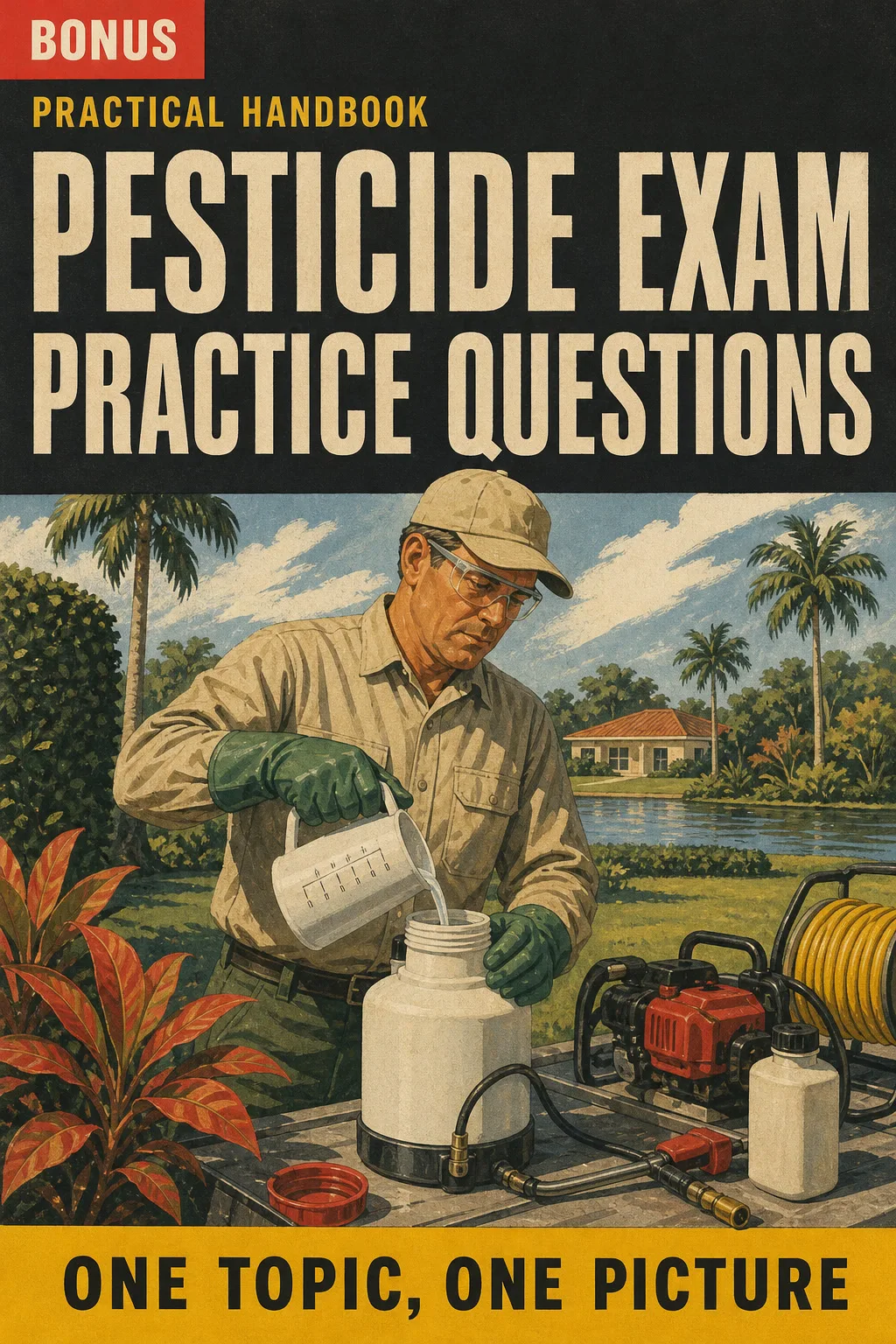
Pesticide Exam Practice Questions

BONUS 1: «Pesticide Exam Practice Questions»

Value on its own: US$ 17.90

Exam-style questions grouped by topic, each answer explained in one line, so you can see exactly which pages to review again.

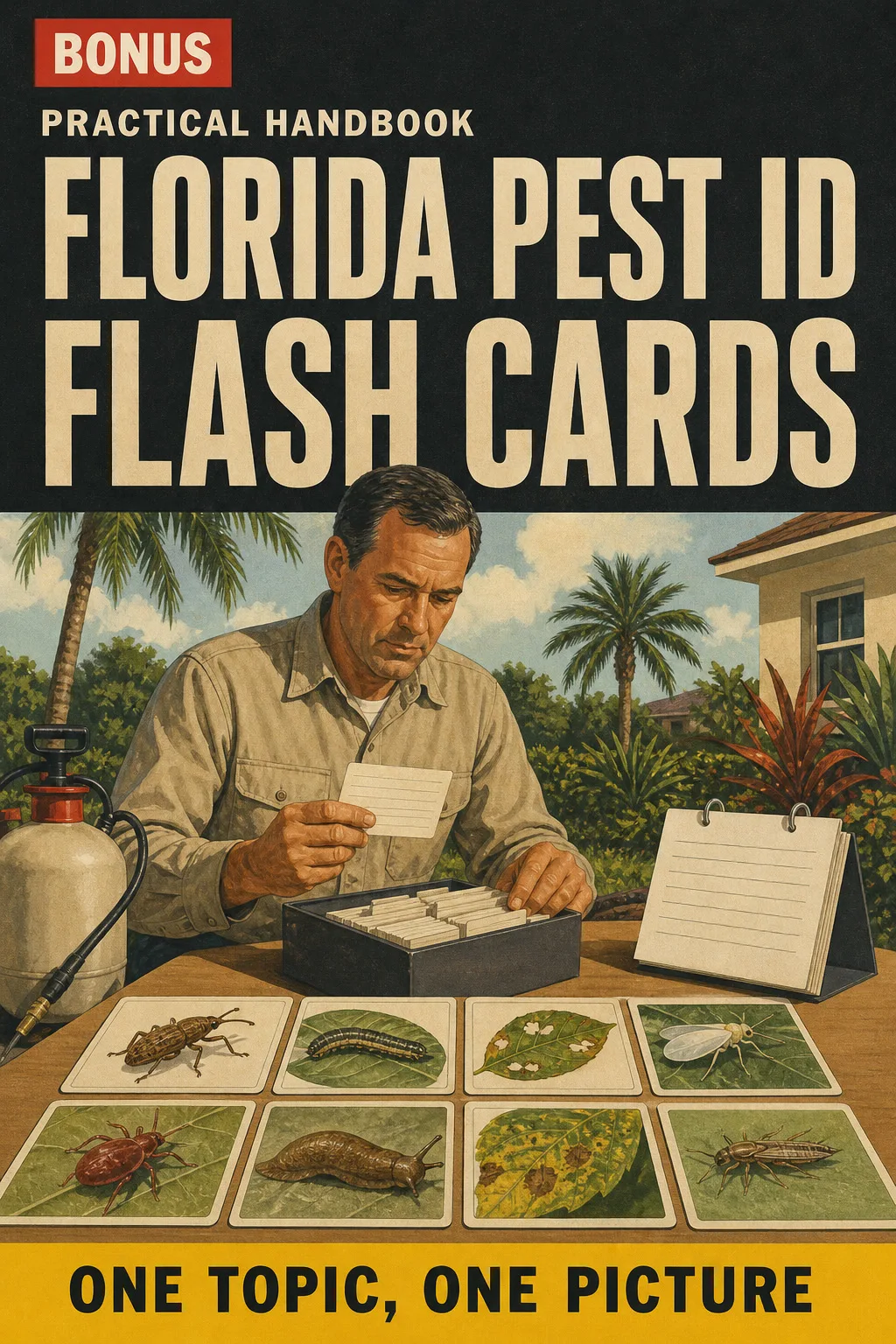
Florida Pest ID Flash Cards

BONUS 2: «Florida Pest ID Flash Cards»

Value on its own: US$ 14.90

Each pest and its damage sign on one card, to review in the truck between jobs and spot it at a glance on site.

Landscape Pest Control Illustrated with 2 Free Books

  • Landscape Pest Control Illustrated: 66 illustrated pagesUS$ 63
  • BONUS 1: Pesticide Exam Practice QuestionsUS$ 17.90
  • BONUS 2: Florida Pest ID Flash CardsUS$ 14.90
  • High-resolution PDF to printIncluded
Total value US$ 95.80
YOUR PRICE:
US$ 27
You save US$ 68.80
YES, I WANT LANDSCAPE PEST CONTROL ILLUSTRATED FOR US$ 27

📄 This is a digital PDF book sent to your email: nothing is printed or shipped.

Secure purchaseEncrypted payment30-day guarantee

PDF by email: We email you Landscape Pest Control Illustrated as a PDF, together with the two free books. It's a single payment: no installments, no extra charges.

Who This Book Is For

You're studying for the LCLM exam

You're studying for the LCLM exam

You get the label, IPM, calibration and safety in the order you use them on the job, one drawing per page, in short sentences.

Your exam date is close

Your exam date is close

You review a whole topic at a glance, check yourself with the practice questions and see exactly which pages to go back to.

You already spray beds on the job

You already spray beds on the job

You tell the client which pest it is and why you apply what you apply, with the page in the truck if you need it.

Everything You Get Today

US$ 95.80US$ 27
YES, I WANT LANDSCAPE PEST CONTROL ILLUSTRATED FOR US$ 27

📄 This is a digital PDF book sent to your email: nothing is printed or shipped.

30DAYS
GUARANTEE

30-Day Guarantee

Try Landscape Pest Control Illustrated for 30 days, bonus books included.

We refund everything if the file won't open, if the book isn't what you see here, if you were charged twice or if the email doesn't arrive. Just email us.

You pay once. No subscriptions.

Frequently Asked Questions

Is this for me if I've been spraying plant beds for years?

Yes. It doesn't teach you the job you already know. It puts the label, IPM, calibration and the rules in the order you use them on the job, one drawing per page, in short sentences, so you can review fast before the exam.

Where does the content come from?

It's written for Florida's Limited Commercial Landscape Maintenance category, not a generic book for any state. It's based on Chapter 482 of the Florida Statutes, Rule Chapter 5E-14 of the Florida Administrative Code and the current UF/IFAS training manuals. Regulatory figures are marked so you can check them against the current official version.

Is this official material?

No. It's independent study material, not affiliated with or endorsed by FDACS or UF/IFAS. And the product label is always the law.

Does it replace the course or the required training?

No. It helps you prepare and review, but it doesn't replace the official study manuals, any required training or the FDACS requirements for the license. It doesn't give you a certificate, a license or training-hour credit: it's a study book.

Are the practice questions the ones on the exam?

No. They are written for this book, grouped by topic, each with a one-line explanation. They are not official questions from any exam.

When and how do I get it?

In PDF by email, to the address you enter at checkout. The 2 bonus books come with it.

Does it work for my state?

It's written for the Florida Limited Commercial Landscape Maintenance exam and Florida rules. The label, IPM, pest ID and calibration pages work anywhere, but other states have their own exams and rules.

Can I have it on paper?

Yes. It's a PDF you can print at home or at a print shop and keep in the truck.

How does the refund work?

You have 30 days. We refund everything if the file won't open, if the book isn't what you see on this page, if you were charged twice or if the email doesn't arrive: just email us.

Before You Close This Page

No more rereading pages that don't stick.

Whiteflies, scales and mites: you see them drawn, and that's it.

You walk into the exam knowing where everything is.

Drawings make studying faster.

The book is right below.

One-time payment: US$ 27 · Guarantee: 30 days · PDF by email

YES, I WANT LANDSCAPE PEST CONTROL ILLUSTRATED FOR US$ 27

📄 This is a digital PDF book sent to your email: nothing is printed or shipped.